the history of LEGO® SERIOUS PLAY®
How a small idea, a few curious minds, and a committed community shaped a global method
The story of LEGO® SERIOUS PLAY® begins in the mid-1990s, inside the family-owned LEGO® Group. Kjeld Kirk Kristiansen, the owner and grandson of the founder, could feel the world changing around him. Children were turning to video games, play patterns were shifting, and the LEGO® Group needed a new strategic direction. Yet the strategy workshops he attended felt flat and uninspired — a strange mismatch for a company built on imagination.
At the same time, two professors at IMD in Lausanne, Johan Roos and Bart Victor, were exploring new ways to help leaders think differently about strategy-making. Through the LEGO® Group’s long-standing relationship with the school, they began experimenting with something unusual: using LEGO® bricks instead of Post-its and whiteboards to explore strategies. Their early experiments were intriguing, but something essential was missing — a structured process based on a deeper understanding of how people learn, create meaning, and unlock new ideas.
Building the LEGO® SERIOUS PLAY® Method (1999–2004)
That missing piece arrived in 1999, when Robert Rasmussen, then head of product development for LEGO® Education, was asked by Kjeld Kirk to join the effort. Robert brought a human-learning perspective that transformed the experiments into something more powerful. He began shaping the work into a structured, repeatable method.
In 2001, Per Kristiansen joined him and in January 2002, the first application of the method was officially launched. Over the next several years, Robert expanded it into an actual method with the modular system used today — the 4-Step Core Process and the 7 Application Techniques — making it possible to design workshops for a wide range of challenges. Per continued to develop facilitator training and global adoption.
Behind the scenes, the development had been funded by Executive Discovery LLC, a company owned by Kjeld Kirk Kristiansen – owner of the LEGO Group. When the LEGO® Group acquired Executive Discovery in 2004, Robert and Per initially left the company.
Per returned in 2005 to rebuild the LSP activities and training programs, while Robert continued developing the method independently. Both collaborated on what became known as “Version 2.0,” later described in their book Building a Better Business Using the LEGO SERIOUS PLAY Method.
The Turning Point (2010)
Then came a turning point. In 2010, LEGO® decided to discontinue facilitator training. Many assumed this might be the end of LSP — but the opposite happened. By then, a passionate global community of practitioners had built their work around the method. Kjeld Kirk Kristiansen and LEGO’s new CEO believed in its value and didn’t want to shut the door on those who relied on it.
Instead, LEGO® released the name and the original version 1.0 method under a Creative Commons License, making it freely available to anyone who wanted to use it.
Version 2.0 — the expanded methodology — remained outside the Creative Commons because it had been developed independently. Its intellectual property later became part of the Association of Master Trainers, founded by Robert and Per after LEGO® stepped back.
Since 2010, LEGO®’s involvement has been limited to producing specialized brick sets designed for LSP. They do not endorse facilitators, training programs, or partners. There are no LEGO®-appointed master trainers and no special status for any provider.
The title “Master Trainer” is historical, not official — Robert and Per are known as such because they had created and delivered the global training programs for a decade. A few others were trained as Trainers of Facilitators before 2010, but plans for a formal LEGO® Training Advisory Board never materialized after the company changed direction. Today, no individual or organization holds official LEGO® status.
A Global Community Emerges (2010–2026)
When LEGO® stepped away from LSP in 2010, it could have marked the end of the method. Instead, it opened a new chapter. Robert Rasmussen and Per Kristiansen continued the work independently, launching a redesigned four‑day Foundation Training Program and a new facilitator manual that established a consistent global standard for learning the LEGO® SERIOUS PLAY® method.
In 2012, they founded the Association of Master Trainers (AoMT) in the LEGO® SERIOUS PLAY® Method , ensuring the method’s continued development through a global network of trainers who completed a rigorous multi‑year apprenticeship. This community carried forward the belief that building ideas with one’s hands leads to clearer thinking, stronger communication and better decision-making.
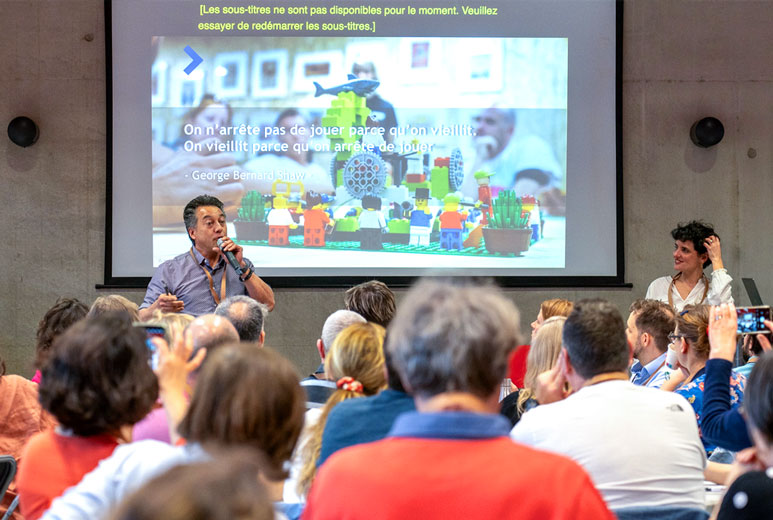
By 2014, the publication of Building Better Business Using the LEGO SERIOUS PLAY Method expanded awareness, and the number of Trainer‑of‑Facilitators reached ten. Between 2016 and 2018, the method grew across languages and regions, with trainings delivered in English, Spanish, French, and Japanese, supported by regional gatherings and a global meeting in Billund, Denmark.
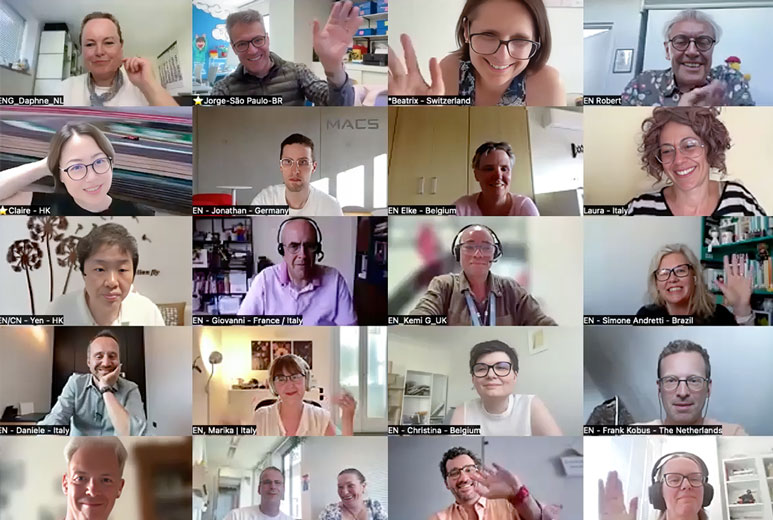
By 2022, more than 15,000 facilitators had been trained under the AoMT. Growth continued through 2026, with 19 trainers delivering certification programs in seven languages — English, Spanish, Portuguese, Italian, French, German, and Japanese — making the method more accessible than ever.
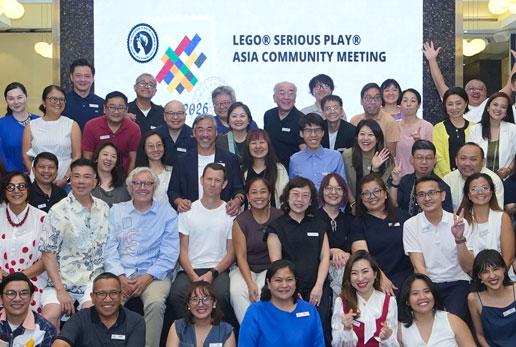
By 2026, LEGO® SERIOUS PLAY® had become a global movement practised across continents and industries, united by the belief that hands‑on building leads to deeper insights, better communication, and more meaningful solutions.
Why the Method Endures
And still, the method thrives.
- It thrives because a community believes in it.
- It thrives because it works.
- It thrives because it continues to evolve through the people who use it, teach it, and bring it to life in rooms around the world.